Understanding Your Options for a Brighter Smile
When you’re ready to transform your smile, two of the most popular cosmetic treatments at Georgetown Advanced Dentistry are professional teeth whitening and dental veneers. These treatments achieve different goals: whitening lifts stains and brightens your natural enamel, while veneers completely reshape the look of your teeth. Knowing the difference—and what each option can and can’t do—will help you choose the best solution for your needs.
What Is Professional Teeth Whitening?
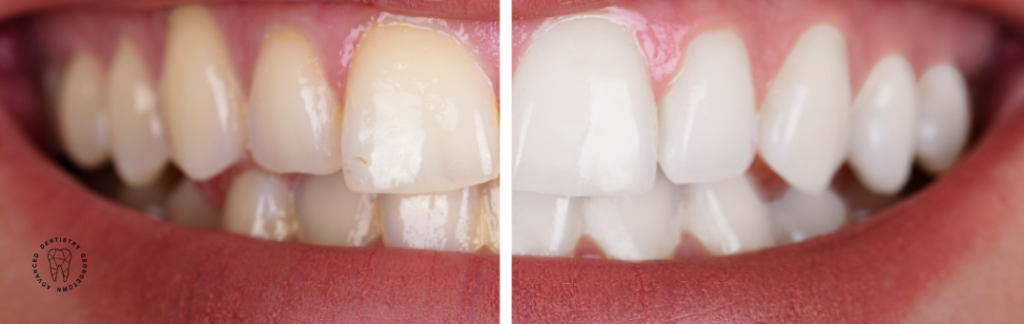
Professional whitening uses concentrated hydrogen peroxide or carbamide peroxide to oxidize stains within the enamel. At Georgetown Advanced Dentistry, our Zoom! in‑office treatment involves applying whitening gel to your teeth and activating it with an LED light in three 15‑minute sessions. In less than an hour, your smile can lighten several shades. The treatment is safe when done under a dentist’s supervision and can brighten teeth that have yellow or brown stains from coffee, tea, wine or smoking.
Pros of Teeth Whitening
- Quick results: In‑office whitening delivers noticeable brightness in about an hour.
- Affordable: Whitening is one of the most cost‑effective cosmetic dental treatments.
- Non‑invasive: It does not alter tooth structure—no drilling or anesthesia is required.
- Boosts confidence: A whiter smile enhances your appearance with minimal investment.
Cons of Teeth Whitening
- Results are not permanent: Whitening effects typically last 6–24 months and require periodic touch‑ups.
- May cause sensitivity: Some patients experience temporary tooth or gum sensitivity.
- Limited effectiveness: Whitening cannot remove intrinsic stains caused by medication, trauma or fluorosis.
- Does not change tooth shape: Whitening will not correct chips, gaps or misalignment.
What Are Veneers?
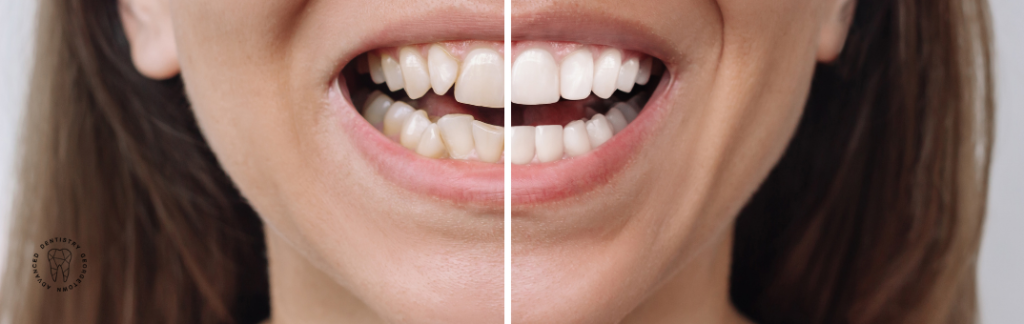
Veneers are thin, custom‑made shells of porcelain or composite resin bonded to the front surfaces of teeth. They conceal heavy discoloration, chips, cracks, gaps and mild misalignment, providing a complete makeover for teeth that are otherwise healthy. Veneers are purely cosmetic—patients must be free of cavities and gum disease before they can proceed.
Pros of Veneers
- Dramatic transformation: Veneers change tooth color, shape, size and minor alignment issues all at once.
- Long‑lasting results: Porcelain veneers can last decades and resist staining from coffee, tea and wine.
- Natural look and feel: Custom shading and contouring create a seamless, lifelike smile.
- High success rate: Studies show over 90 % survival for porcelain veneers at 10 years.
Cons of Veneers
- Higher cost: Veneers cost more than whitening because they’re custom‑made and require multiple appointments.
- Irreversible: The procedure usually requires removing a thin layer of enamel, so the tooth will always need a restoration.
- Risk of chips: Although porcelain is strong, veneers can chip if you bite on hard objects or grind your teeth.
- Not a restorative solution: Veneers do not strengthen weak teeth; they only cover the front surface.
Cost and Longevity: Whitening vs. Veneers
Cost is a major factor when comparing whitening and veneers. Professional in‑office whitening typically ranges from $300 to $700 per session, while custom take‑home trays are around $200 to $400. These results last six months to two years, depending on diet and oral hygiene.
By contrast, porcelain veneers generally cost $900 to $2,500 per tooth and can last 10–20 years. Composite veneers are less expensive but have a shorter lifespan (around five years). Although veneers require a larger upfront investment, their durability and resistance to staining mean fewer replacements over time.
When Whitening Works—and When It Doesn’t
Professional whitening is ideal for:
- Extrinsic stains: Yellow or brown discoloration from coffee, tea, red wine, tobacco and aging.
- Evenly shaped teeth: Patients who are happy with their tooth shape but want a brighter color.
Whitening is not effective for:
- Intrinsic or grayish stains: Discoloration from medications (tetracycline), trauma or developmental conditions.
- Severely stained or decayed teeth: Veneers or crowns may be needed to cover deep stains and structural damage.
- Gaps, chips or misalignment: Whitening does not change tooth shape or alignment.
Veneers may be better suited if you have:
- Permanent discoloration that doesn’t respond to bleaching.
- Cracked or chipped teeth, gaps or minor crookedness.
- Desire for a complete smile makeover—including color, shape and symmetry changes at once.
Take the Next Step Toward a Bright, Confident Smile
Choosing between teeth whitening and veneers depends on your specific goals, budget and dental health. Whitening is ideal for patients who love the shape of their teeth but want a brighter color. Veneers offer a comprehensive makeover for teeth with permanent stains, chips, gaps or minor misalignment.
At Georgetown Advanced Dentistry in Washington, DC, we offer Zoom! in‑office whitening and custom porcelain and composite veneers. Our team will assess your smile, discuss your goals and recommend the treatment—or combination of treatments—that will give you the brightest, most beautiful results.
Ready to find out which option is right for you?
Frequently Asked Questions
1. How long does teeth whitening last?
Whitening results can last from 6 months to 2 years depending on your diet, oral hygiene habits and whether you schedule periodic touch‑ups. Avoiding stain‑causing foods and using take‑home trays will help maintain your brightness longer.
2. Do veneers stain like natural teeth?
Porcelain veneers are highly resistant to staining. Composite veneers may be more prone to discoloration but can be polished or replaced if needed. Maintaining good oral hygiene and limiting dark foods and beverages will keep both veneers and natural teeth looking bright.
3. Is teeth whitening safe?
When performed by a dentist or with dentist‑supervised kits, whitening is considered safe and effective. Overuse of at‑home products, however, can cause sensitivity or uneven results. Professional guidance ensures the right strength and application time for your teeth.
4. Are veneers permanent?
Veneers themselves may eventually need replacement, but the enamel removal makes the procedure irreversible. Porcelain veneers typically last 10–20 years, while composite veneers last around five years.
5. Which option is more expensive?
Veneers are significantly more expensive than whitening. An in‑office whitening session costs a few hundred dollars, while a single porcelain veneer may cost over a thousand dollars. However, veneers provide a longer‑lasting transformation and address multiple aesthetic issues at once.
6. Can I get both treatments?
Yes. Many patients whiten their teeth first, then match veneers or other restorations to their new shade. Whitening can also maintain the brightness of teeth not covered by veneers.