Crowns & Bridges in Washington, DC
Custom-designed restorations that look, feel, and function like your natural teeth
Please don't hesitate to call us at (202) 920-1410
A dental crown protects a compromised tooth. A dental bridge closes the gap of a missing one. Together, they're the foundation of restorative dentistry — and precision is everything.
At Georgetown Advanced Dentistry, Dr. Sinclair Davis, DDS, designs crowns and bridges with CAD/CAM 3D restoration technology for exact fit and proportion. The ultra-quiet KaVo electric handpieces used throughout the practice make the preparation process noticeably more comfortable for patients who experience dental anxiety. We serve patients throughout Washington, DC, including Georgetown, Chevy Chase, Tenleytown, American University Park, Friendship Heights, and Northwest DC.
What Is a Dental Crown?
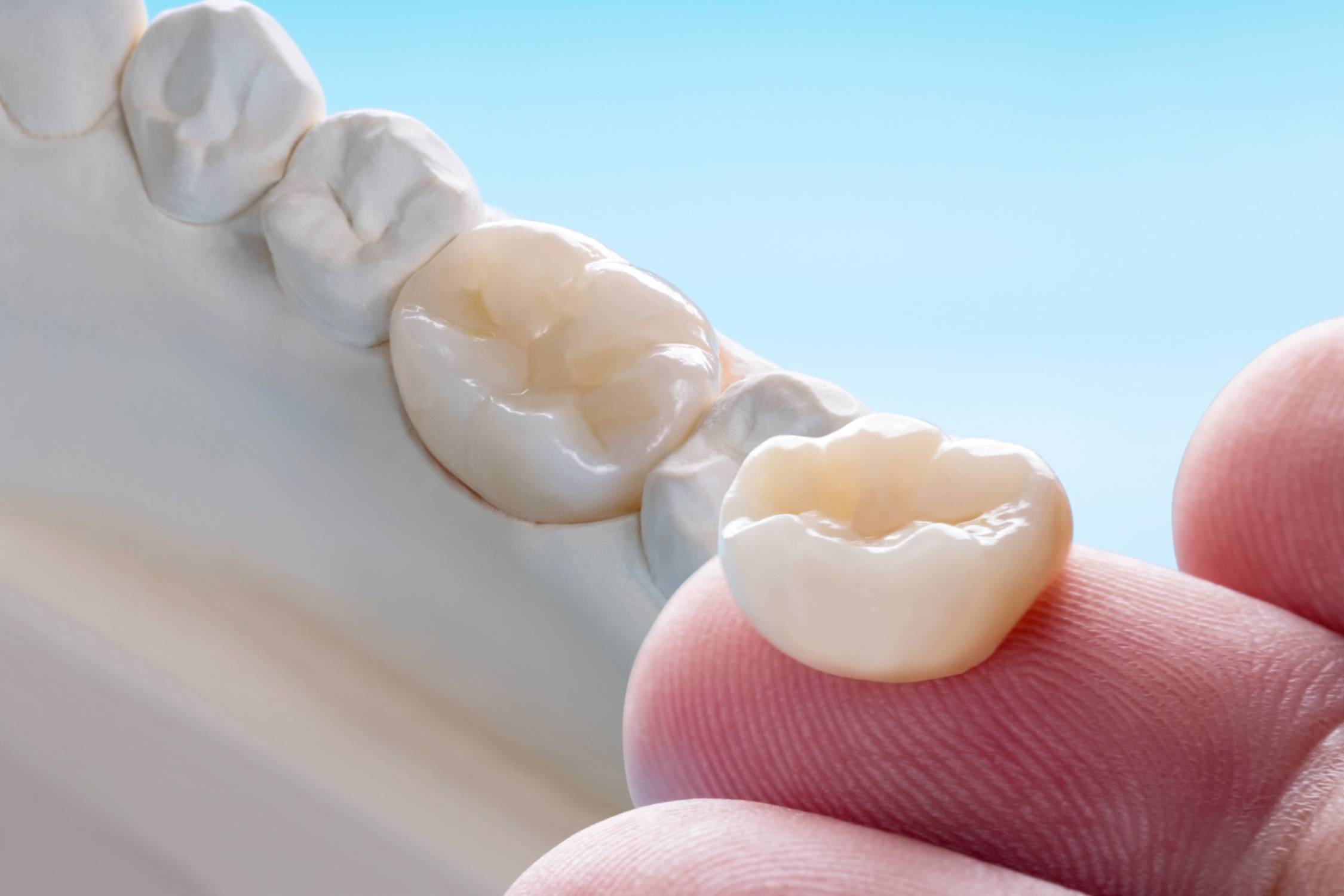
A crown is a full-coverage restoration that fits over the entire visible portion of a tooth, from the gumline up. Once cemented in place, it becomes the new outer surface of the tooth — protecting the structure underneath while restoring normal bite function and appearance.
Crowns are fabricated to match the color, shape, and size of your surrounding teeth. When done well, they are functionally and aesthetically seamless. Georgetown Advanced Dentistry uses dental implants as anchors for individual crown restorations when a natural tooth root is missing.
When Is a Crown the Right Choice?
Dr. Davis recommends a crown when a tooth is damaged or weakened to the point where a filling or bonding is no longer sufficient to protect it.
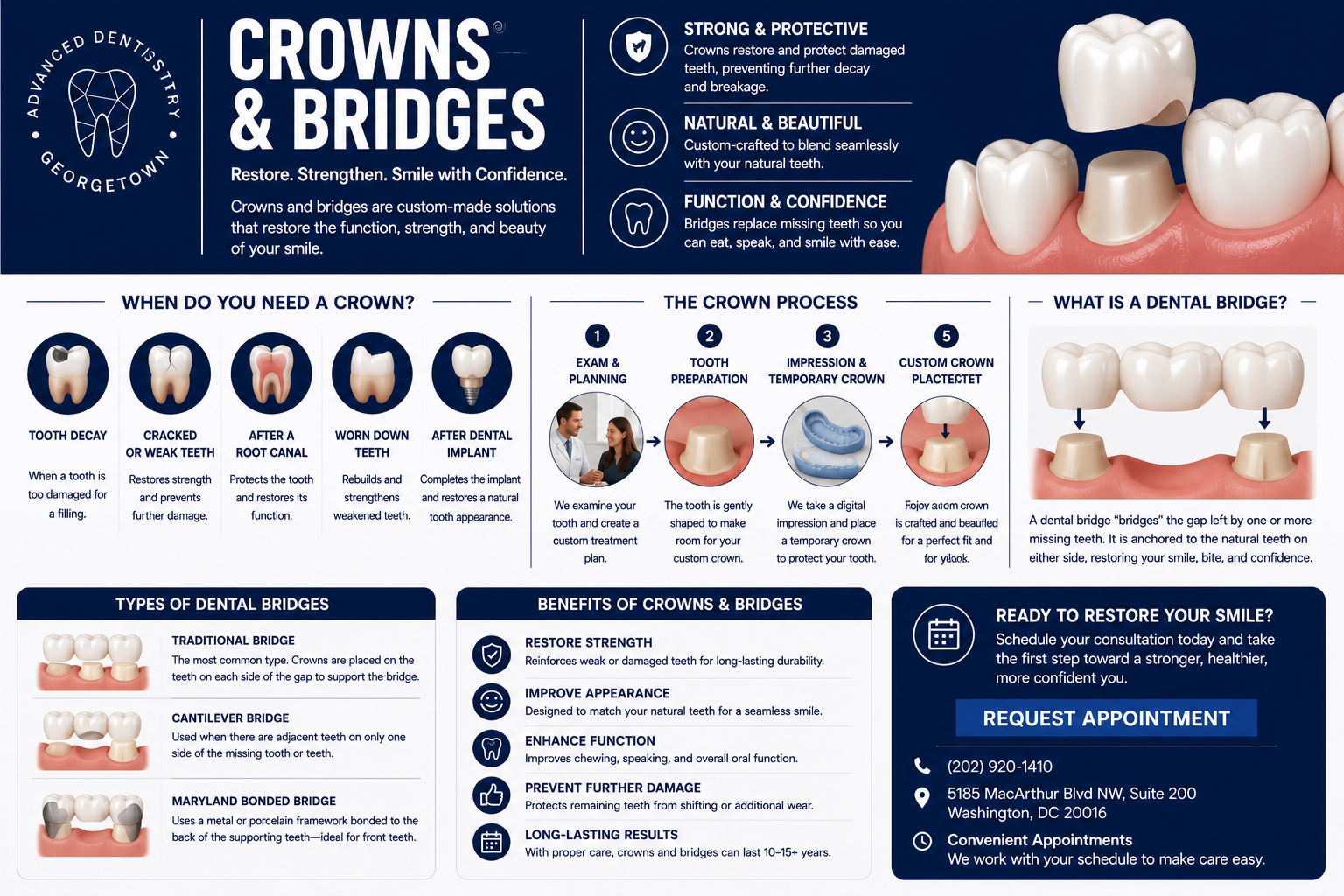
Large Cavity or Filling
When too little natural tooth structure remains for a filling to hold reliably long-term.
Cracked or Fractured Tooth
Particularly a tooth that causes pain when biting — a crown holds the structure together.
After a Root Canal
A treated tooth becomes more brittle over time; a crown protects it from future fracture.
Severe Discoloration
For discoloration or misshaping too extensive for veneers or whitening to address.
To Complete an Implant
A dental implant requires a custom crown to fully restore the tooth's form and function.
To Anchor a Bridge
Traditional bridges rely on crowns placed over the abutment teeth for support.
Options Tailored to Your Case
Different materials serve different needs. Dr. Davis matches material to case based on tooth location, aesthetic priority, and biting forces.
Zirconia & All-Ceramic
Strength Meets Aesthetics
Ceramic and zirconia crowns offer the most natural appearance and are the primary choice for front teeth and visible areas of the smile.
E.Max Lithium Disilicate
Premium Front-Tooth Choice
E.Max crowns offer higher translucency than standard ceramic, closely mimicking the way natural tooth enamel transmits light.
Porcelain-Fused-to-Metal
Durability with Trade-Offs
PFM crowns combine a metal substructure with a porcelain outer layer for strong structural durability. A faint gray line can sometimes appear at the gumline over time.
What Is a Dental Bridge?
A dental bridge is a fixed restoration that fills the gap left by one or more missing teeth. It's anchored in place by crowns on the adjacent natural teeth — or by dental implants — and once cemented, it functions like your original teeth.
Bridges restore chewing ability, prevent the surrounding teeth from shifting into the gap, and complete your smile aesthetically. They're a well-established, non-surgical option for patients who want a fixed restoration without the timeline of implant placement.
The Three Components
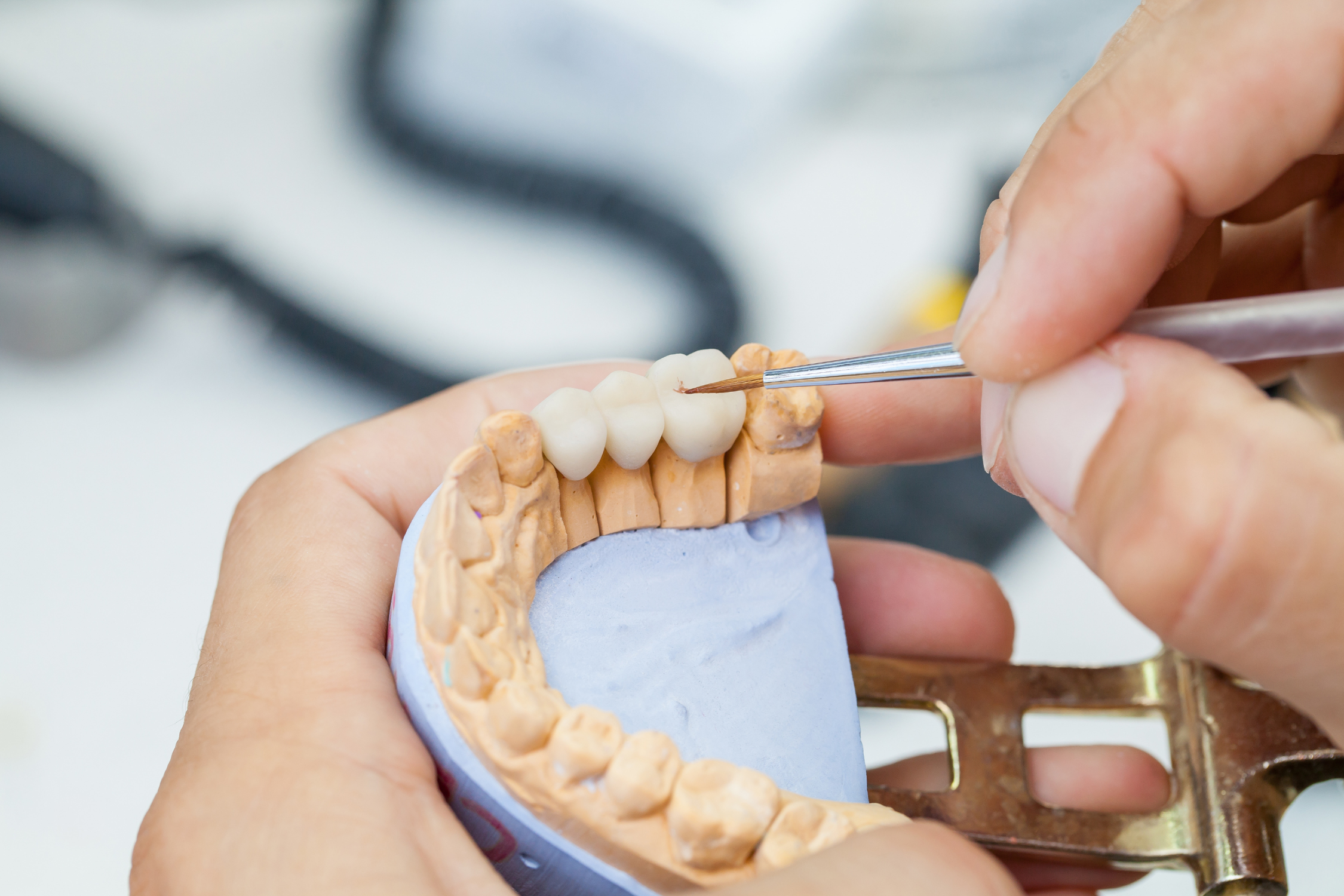
Every dental bridge is built from three functional parts that work together to close the gap.
Pontic
The artificial tooth (or teeth) that fills the empty space where the natural tooth used to be.
Abutment Teeth
The natural teeth — or implants — on either side of the gap that support the bridge.
Crowns
The full-coverage caps placed over the abutment teeth to hold the bridge securely.
Types of Dental Bridges
The right bridge depends on where the missing tooth is, the health of neighboring teeth, and long-term goals.
Traditional Bridge
Uses full crowns on both natural teeth adjacent to the gap to anchor the pontic in the middle. Extremely strong and durable.
Cantilever Bridge
Uses a crown on only one supporting tooth. Reserved for cases where only one natural neighbor is available.
Maryland Bridge
Uses porcelain or metal wings bonded to the back of neighboring teeth — no enamel removal from the front.
Implant-Supported
Anchored by dental implants instead of natural teeth. The longest-lasting bridge option available.
Dental Bridge or Dental Implant?
Both are excellent solutions — the right choice depends on your timeline, budget, and long-term goals. Dr. Davis discusses both at consultation.
Dental Bridge
Faster · Non-Surgical · Cost-Effective
- Completed in about 2–4 weeks over 2 visits
- No surgery, no bone grafting required
- Typically lasts 10–15 years with proper care
- Requires reshaping the adjacent anchor teeth
- Does not prevent underlying jawbone loss
Dental Implant
Longer-Term · Preserves Bone · Independent
- Total timeline of 3–6 months (osseointegration)
- Requires minor oral surgery under anesthesia
- Can last 25 years or a lifetime with care
- Leaves neighboring teeth completely untouched
- Stimulates and preserves jawbone density
The Crown & Bridge Process
A typical restoration takes two visits, spaced 1–2 weeks apart. Every step is engineered for precision and comfort.
Preparation
The tooth (or abutment teeth for a bridge) is gently shaped to create space for the restoration to sit at the correct height and alignment. Georgetown Advanced Dentistry uses ultra-quiet KaVo electric handpieces — producing significantly less noise than conventional air-driven drills — making preparation noticeably more comfortable for anxious patients.
Impressions & CAD/CAM Design
Digital impressions or traditional molds of your prepared teeth are taken to guide fabrication. CAD/CAM 3D design technology allows Dr. Davis to plan the crown or bridge with precise fit and proportion before fabrication begins.
Temporary Restoration
A temporary crown or bridge is placed to protect the prepared teeth and maintain normal function and appearance while your permanent restoration is being fabricated at the dental lab (typically 1–2 weeks).
Final Placement
When your permanent restoration is ready, the temporary is removed, the teeth are checked for fit and bite alignment, and the crown or bridge is cemented into place. Most patients leave this appointment with a restoration that immediately feels natural.
Aftercare & Follow-Up
Continue brushing and flossing twice daily — bridges may require specialized floss threaders or a water flosser to clean underneath the pontic. Regular six-month exams at Georgetown Advanced Dentistry allow your restoration to be monitored long-term.

Why Georgetown Advanced Dentistry
Every crown and bridge at Georgetown Advanced Dentistry is designed with technology and delivered with a level of surgical and restorative precision that patients across Washington, DC come to us for.
Frequently Asked Questions
Straight answers to what patients ask most about crowns and bridges.
How long do dental crowns last?
With proper care, dental crowns typically last between 10 and 20 years — and in some cases longer. Longevity depends on the material chosen, the location in the mouth, oral hygiene habits, and whether the patient grinds or clenches their teeth. Regular professional exams allow the crown to be monitored and any wear identified early.
How long does a dental bridge last?
Traditional dental bridges typically last 10 to 15 years with proper care, though many last longer. Implant-supported bridges can last 20 to 30 years or more because they anchor into the jawbone rather than relying on natural teeth. Longevity depends heavily on daily oral hygiene, diet, and habits like grinding.
Which crown is best for teeth grinding (bruxism)?
Zirconia is generally the preferred material for patients who grind or clench their teeth. Its superior fracture resistance makes it far more durable under the repeated heavy forces bruxism generates. A custom night guard worn over your crown is also recommended to protect the restoration long-term.
Is a bridge or an implant better?
Neither is universally better — the right choice depends on your case. Implants preserve jawbone, don't require altering neighboring teeth, and last longer, but they involve surgery and a longer timeline. Bridges are faster, non-surgical, and less expensive upfront, but they require reshaping adjacent teeth and don't prevent bone loss beneath the gap. Dr. Davis evaluates both options with each patient during consultation.
How do you clean under a dental bridge?
Cleaning under a bridge requires specialized tools because normal floss can't pass between the pontic and gumline. Options include a floss threader (which pulls regular floss under the bridge), Super Floss (pre-cut with a stiff threading end), interdental brushes, or a water flosser. Daily cleaning underneath is essential to prevent decay on the supporting abutment teeth.
Can you eat normally with a dental bridge?
Yes — once the permanent bridge is cemented, you can eat most foods normally. Dentists generally recommend avoiding extremely hard foods (like ice or hard candy) and very sticky foods (like caramel or taffy) that could dislodge the bridge or damage the porcelain. Cutting hard fruits like apples into slices rather than biting directly is a good habit.
Are dental crowns worth it?
For a tooth that is significantly damaged, cracked, or has undergone a root canal, a crown is typically the most durable and functional long-term solution available. The alternative — allowing the tooth to fracture further or eventually requiring extraction — is generally more complex to address. A well-placed crown, properly maintained, protects the natural tooth structure for many years.
What's a cheaper alternative to a crown?
Depending on the extent of damage, dental onlays (sometimes called partial crowns) can restore a tooth that has been damaged but does not require full-coverage protection. Onlays cover the affected cusps and damaged areas without removing as much healthy tooth structure. Whether an onlay is appropriate depends on how much of the tooth remains intact — Dr. Davis evaluates this at your consultation.
Schedule a Crown or Bridge Consultation in Washington, DC
If you have a cracked, damaged, or heavily restored tooth — or a gap from a missing tooth that's been affecting your bite — Georgetown Advanced Dentistry can evaluate whether a crown or bridge is the right solution. Contact the office to schedule a consultation with Dr. Davis.