Invisalign in Washington, DC
Clear aligners for adults and professionals — straighter teeth without the visibility of braces
Please don't hesitate to call us at (202) 920-1410
For adults and professionals who want straighter teeth without the visibility and dietary restrictions of traditional braces, Invisalign offers a clear, comfortable, and clinically proven path.
The system uses a series of custom-fabricated clear aligner trays to move teeth gradually and predictably — and because the trays are removable, treatment fits around your life, not the other way around. At Georgetown Advanced Dentistry, Dr. Sinclair Davis, DDS, offers Invisalign as part of a comprehensive cosmetic dentistry portfolio designed for the Northwest DC patient who values discretion and quality. Whether you're addressing long-standing alignment issues or refining your smile as part of a broader cosmetic plan, Invisalign can be sequenced with whitening, veneers, or other restorative work.
Three Steps From Consultation to Straighter Teeth
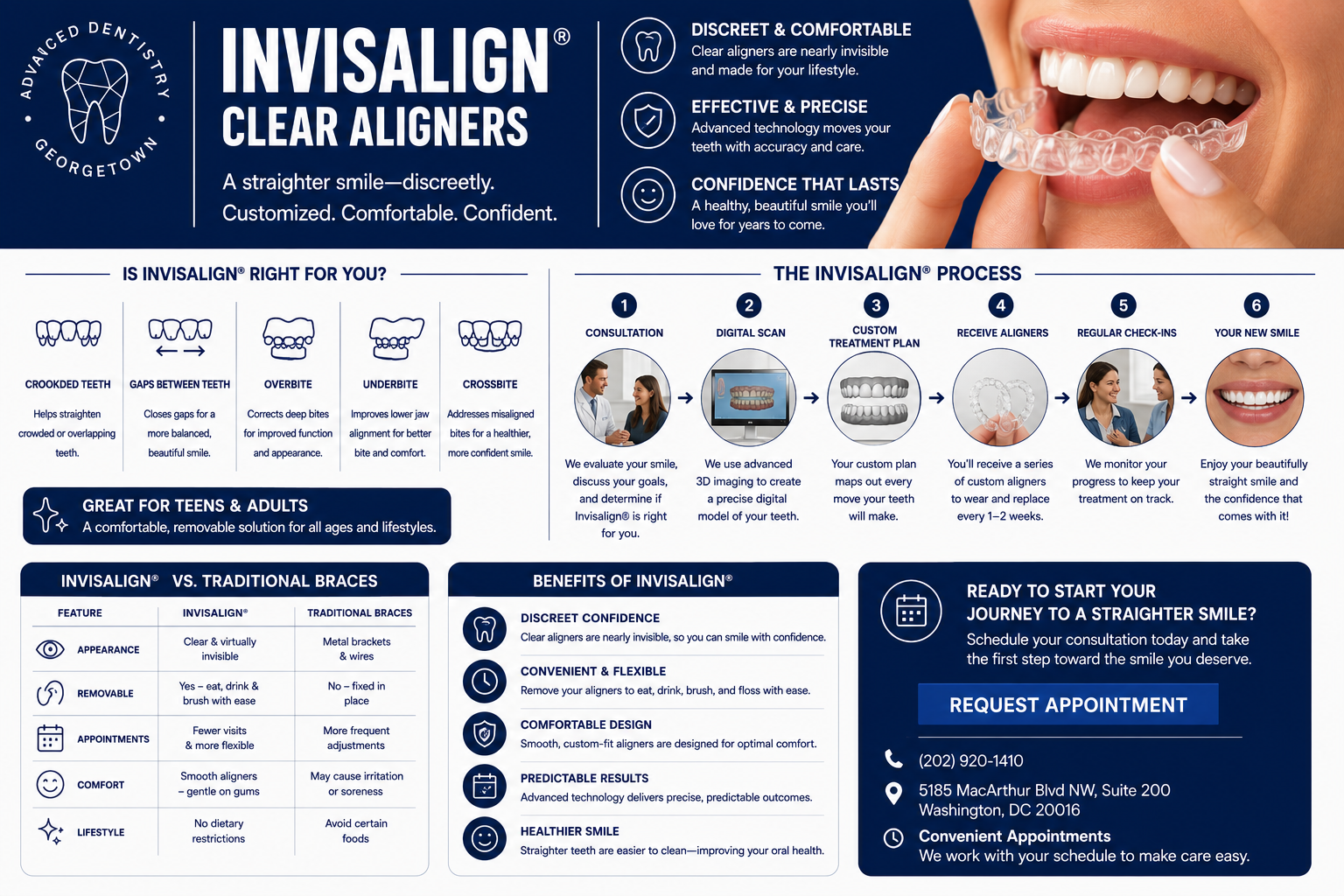
Invisalign treatment starts with digital scanning — no uncomfortable putty impressions — and follows a clear, predictable path.
Digital 3D Scan
A detailed digital scan creates a precise 3D model of your teeth. Dr. Davis maps the planned movements and shows you a preview of your projected result before treatment begins.
Custom Aligner Series
A custom series of clear aligner trays is fabricated. Each tray moves your teeth a small, controlled amount — worn approximately one to two weeks before switching to the next in sequence.
Progress Check-Ins
Periodic check-ins with Dr. Davis monitor progress and provide your next sets of aligners. Adjustments are made as needed to keep your treatment on schedule.
Seven Common Alignment Issues
Invisalign is effective for a wide range of mild-to-moderate orthodontic issues in adults and teens.
Crowded Teeth
When there isn't enough space in the arch for teeth to sit properly.
Spaced Teeth
Gaps between teeth caused by missing teeth or natural spacing.
Overbite
Upper front teeth that overlap the lower front teeth excessively.
Underbite
Lower teeth that sit in front of the upper teeth when biting.
Crossbite
Upper and lower teeth that do not align correctly side to side.
Overjet
Upper front teeth that protrude horizontally past the lower teeth.
Open Bite
Upper and lower front teeth that don't make contact when biting.
Combination Cases
Mild-to-moderate mixes of the above — evaluated individually by Dr. Davis.
What to Expect While Wearing Invisalign
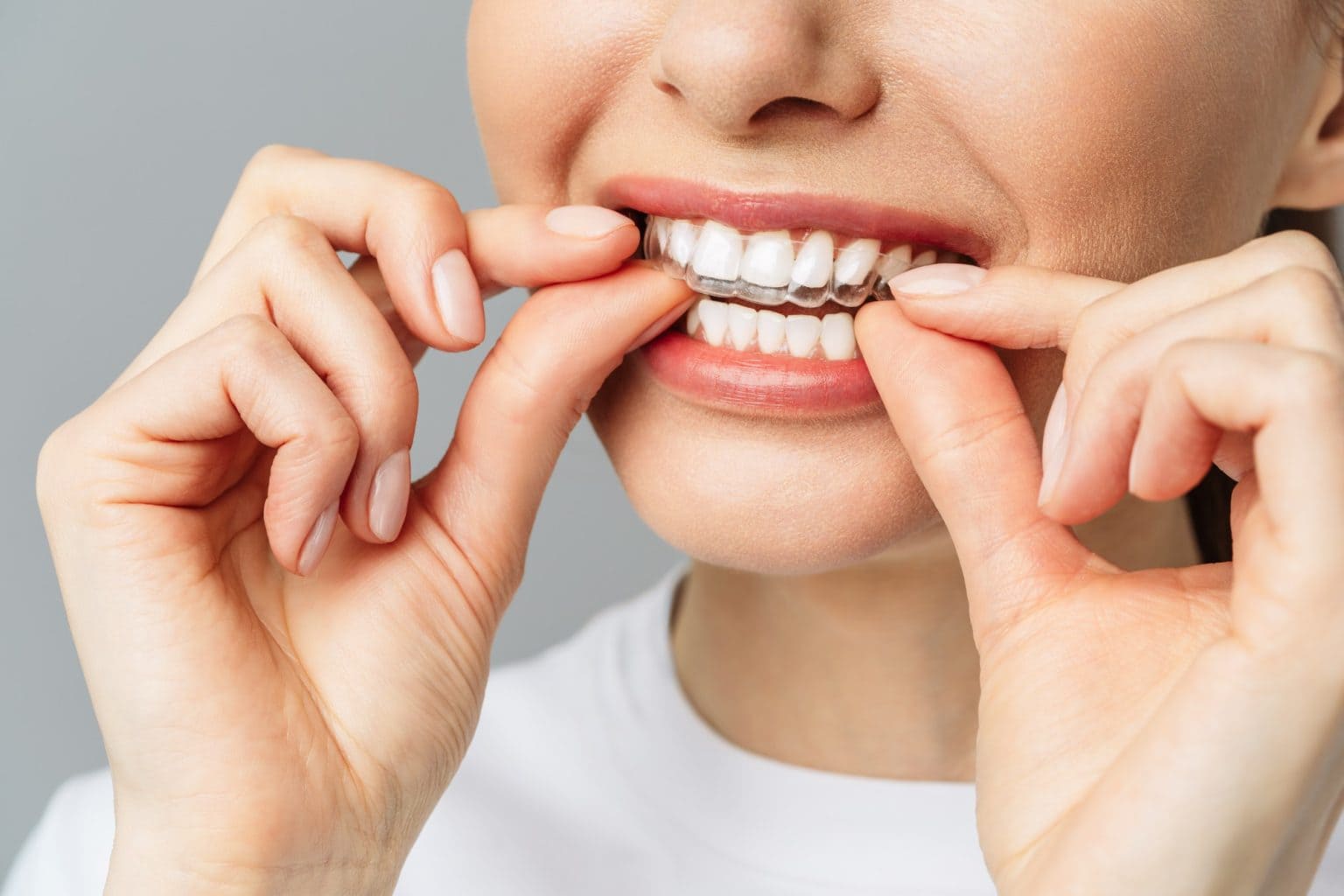
Clear aligners fit into a real life. They come out for meals, brushing, and flossing — then go right back in. Here's what patients tell us actually matters day to day:
- Wear Time: 20–22 hours daily Remove only for eating, drinking anything other than water, brushing, and flossing. Compliance drives your timeline.
- Comfort: Mild pressure, not pain Each new tray creates light pressure for a day or two — a sign the trays are working. Far less disruptive than braces adjustments.
- Oral Hygiene: Normal routine Aligners come out for brushing and flossing. Rinse trays with water and brush gently with a soft toothbrush to keep them clean.
- No Dietary Restrictions Unlike braces — no forbidden foods. Simply remove your aligners before eating anything other than water.
Invisalign vs. SureSmile
Georgetown Advanced Dentistry offers both leading clear aligner systems. Both use medical-grade plastic trays and sequential aligner therapy — but the underlying technology differs. Dr. Davis recommends the system best suited to your clinical situation.
Invisalign®
Most Widely Known · Longest Track Record
- Established brand with 20+ years of clinical data
- SmartTrack proprietary aligner material
- Ideal for the broadest range of cases
- Available at Georgetown Advanced Dentistry
SureSmile®
Precise Digital Planning · Sometimes Faster
- Highly precise digital customization software
- Can produce faster results in select mild cases
- Uses different proprietary planning algorithm
- Also available at Georgetown Advanced Dentistry
Straighten First — Then Refine
Many Invisalign patients are also interested in improving the color, shape, or overall appearance of their smile. Sequencing Invisalign before whitening or veneers produces the best cosmetic outcome — alignment is addressed first, then aesthetic refinements are made once the teeth are in their correct positions. Dr. Davis can outline a comprehensive cosmetic treatment plan that integrates all of these services.
Frequently Asked Questions
Straight answers to what patients ask most about clear aligner treatment.
How long do you have to wear Invisalign aligners each day?
Twenty to 22 hours per day. The aligners work by applying consistent, light pressure to move teeth in small, controlled increments. Reducing wear time below that threshold allows teeth to drift back between tray changes, slowing or stalling progress. Compliance is the single biggest factor in staying on schedule.
Is Invisalign faster than traditional braces?
For mild to moderate alignment issues, Invisalign typically moves at a comparable pace to traditional braces — and in some cases faster, with results achievable in 6 to 18 months. For complex or severe malocclusions, traditional fixed braces remain more effective and may ultimately be the faster route. The comparison depends entirely on the case — which is why a proper evaluation matters before choosing a treatment approach.
What bite issues can Invisalign fix?
Invisalign is effective for overbites, underbites, crossbites, overjets, crowding, spacing, and open bites of mild-to-moderate severity. Highly complex skeletal jaw discrepancies — where the misalignment involves the bone structure itself, not just tooth position — may be beyond what clear aligners can address alone and may require orthodontic or surgical consultation.
Do I need a retainer after Invisalign?
Yes — retainers are mandatory after completing clear aligner treatment. Without ongoing retention, teeth will gradually return toward their pre-treatment positions (called orthodontic relapse). Most patients wear their retainer nightly long-term to maintain their results. Custom retainers are provided at the conclusion of treatment at Georgetown Advanced Dentistry.
Can clear aligners protect my teeth if I grind at night?
To a degree, yes. Because clear aligners cover the entire biting surface of the teeth, they function similarly to a thin nightguard during wear — providing some protection against enamel wear caused by grinding or clenching. However, for patients with significant bruxism, a dedicated night guard designed specifically for that purpose may be recommended in addition to or after Invisalign treatment.
How does Invisalign compare to braces?
Invisalign offers several practical advantages over traditional braces: no wires or brackets, no dietary restrictions, less mouth irritation, easier oral hygiene (aligners come out for brushing and flossing), and near-invisibility during wear. Traditional braces don't require the same daily compliance since they're fixed in place, and remain more effective for severe or complex malocclusions. For most mild-to-moderate cases in adults and teens, clear aligners are equally effective with a better lifestyle fit.
Schedule an Invisalign Consultation in Washington, DC
If you've been considering Invisalign — or if you want to understand how clear aligner treatment fits into a broader cosmetic plan — Georgetown Advanced Dentistry can walk you through your options in a no-pressure consultation. Contact the office to schedule an appointment with Dr. Davis.