
Tooth Extractions in Washington, DC
Johns Hopkins Oral Surgery Fellowship-trained care, when a tooth cannot be saved
Please don't hesitate to call us at (202) 920-1410
A tooth extraction is always the last resort — but when it is the right call, it should be performed by someone with the surgical training to do it well.
At Georgetown Advanced Dentistry, Dr. Sinclair Davis, DDS, brings oral surgery fellowship training from Johns Hopkins Hospital to every extraction procedure — whether it's a straightforward removal, a complex surgical case, or a wisdom tooth. This level of training matters when a case turns out to be more involved than expected: it means the person handling it is the same person you started with. We serve patients throughout Washington, DC, including Georgetown, Chevy Chase, Tenleytown, American University Park, Friendship Heights, and Northwest DC.
When Is a Tooth Extraction Necessary?
Dr. Davis recommends extraction only when a tooth cannot be saved — or when keeping it in place would harm the surrounding teeth, bone, or overall oral health.
Severe Tooth Decay
Decay that has destroyed too much tooth structure to support a filling or crown.
Advanced Periodontal Disease
Gum disease that has compromised the bone holding the tooth in place.
Fractured Below Gumline
A tooth that has fractured below the gumline and cannot be restored.
Impacted Wisdom Teeth
Wisdom teeth causing pain, infection, or damage to neighboring molars.
Overcrowding Before Orthodontics
Crowding that must be resolved before orthodontic treatment can begin.
Preparation for Implants
Removal in preparation for a dental implant restoration.
Types of Extractions We Perform
Every extraction is scaled to the case — from a straightforward removal to a fully surgical approach.
Simple Extractions
Performed when a tooth is fully erupted and visible above the gumline. The area is numbed with local anesthesia, and the tooth is loosened and removed with specialized instruments. Recovery typically takes a few days.
Surgical Extractions
Required when a tooth is impacted, broken at the gumline, or not fully erupted. Dr. Davis makes a precise incision to access the tooth, sometimes dividing it into sections for easier removal. His fellowship training is directly relevant here.
Wisdom Tooth Removal
The third molars — most people lack the jaw space to accommodate them. Extraction in the late teens or early twenties, before roots fully form, typically results in a smoother procedure and faster recovery.
What to Expect During and After
A clear picture of the procedure itself, the recovery timeline, and the signs to watch for as you heal.
Comfortable, Fully Anesthetized
The extraction site is fully anesthetized before the procedure begins. For surgical extractions, sedation options are available for patients with dental anxiety. You'll feel pressure — but not sharp pain. If you do, Dr. Davis adjusts immediately.
The First 24–48 Hours Matter Most
Georgetown Advanced Dentistry provides detailed post-operative instructions. The essentials:
- Rest for the remainder of the day, head elevated
- No straws, smoking, or spitting for 24 hours — protects the blood clot
- Eat soft foods; avoid the extraction site when chewing
- Use prescribed or recommended pain medication as directed
- Apply ice to the outside of the face in intervals to manage swelling
Signs to Watch For
Contact Georgetown Advanced Dentistry promptly if you experience increasing pain after day two, fever, pus or discharge, or the sharp radiating pain of a dry socket.
Think Beyond the Extraction
An extraction creates a gap that, if left unfilled, leads to bone loss and shifting of surrounding teeth over time. Discussing your replacement plan before the extraction allows Dr. Davis to preserve the bone and tissue in a way that supports the best possible outcome for your dental implant, bridge, or other restoration.
Explore Implant Options →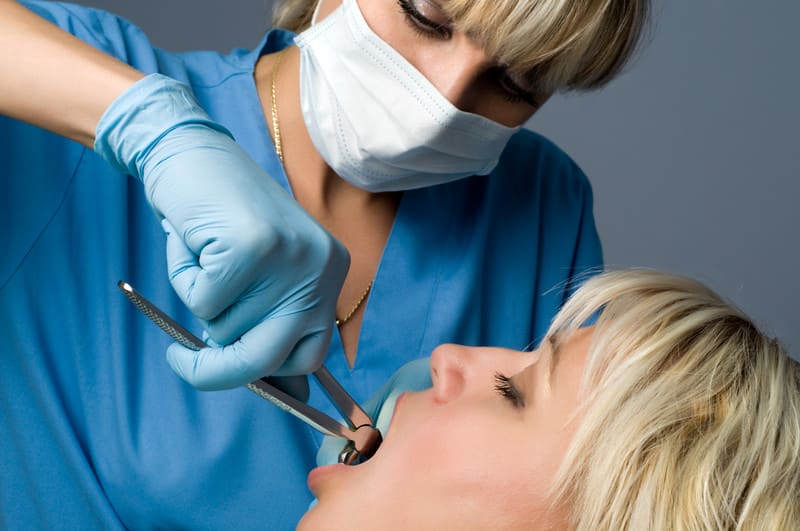
Frequently Asked Questions
Straight answers to what patients ask most about tooth extractions.
What's the worst tooth to get pulled?
Lower wisdom teeth — particularly those that are deeply impacted or positioned horizontally in the jaw — are generally considered the most technically demanding extractions. They sit close to the inferior alveolar nerve and require careful surgical technique. Dr. Davis uses imaging to assess the position of every tooth before recommending an approach.
What is the 3-3-3 rule for tooth infection?
The 3-3-3 rule is a general clinical guideline sometimes referenced for managing dental infections: three days of appropriate antibiotic therapy should begin to show improvement; persistent or worsening symptoms at three days warrant reassessment; and symptoms that have not resolved after three rounds of treatment require further evaluation. Dental infections should always be evaluated by a clinician, not managed at home.
Can I get braces two weeks after wisdom teeth removal?
In most cases, yes — two weeks is sufficient time for the extraction sites to close and initial healing to occur. However, timing depends on how smoothly the extractions healed and whether any complications arose. If wisdom teeth removal is being done specifically to create space for orthodontic treatment, Dr. Davis can discuss sequencing during your consultation.
How long does recovery from a tooth extraction take?
Most patients return to normal activity within a day or two of a simple extraction. Surgical extractions and wisdom tooth removal typically require a few more days of recovery. Full tissue healing at the extraction site typically takes 1–2 weeks, though the underlying bone continues to remodel for several months afterward.
Is a tooth extraction painful?
The procedure itself is not painful — the extraction site is fully anesthetized with local anesthesia, and sedation options are available for surgical cases or patients with dental anxiety. You will feel pressure but not sharp pain during the extraction. Mild soreness, gum tenderness, and sensitivity are normal for a few days afterward and are managed with pain medication and ice.
Schedule a Tooth Extraction Consultation in Washington, DC
If you are experiencing tooth pain, swelling, or have been told by another provider that an extraction may be needed, Georgetown Advanced Dentistry can evaluate your situation and help you understand all of your options. Contact the office to request an appointment with Dr. Davis.