
Which Orthodontic Option Fits Your Smile (and Your Life)?
If you’re exploring orthodontic treatment in Washington, DC, you’ve probably asked the big question: Invisalign or braces? Both straighten teeth and correct bite issues, but the way they do it—and how they fit into your daily life—differs dramatically.
At Georgetown Advanced Dentistry, our team offers both Invisalign® clear aligners and traditional braces, helping patients choose the treatment that aligns with their goals, lifestyle and budget.
Understanding How Each Treatment Works
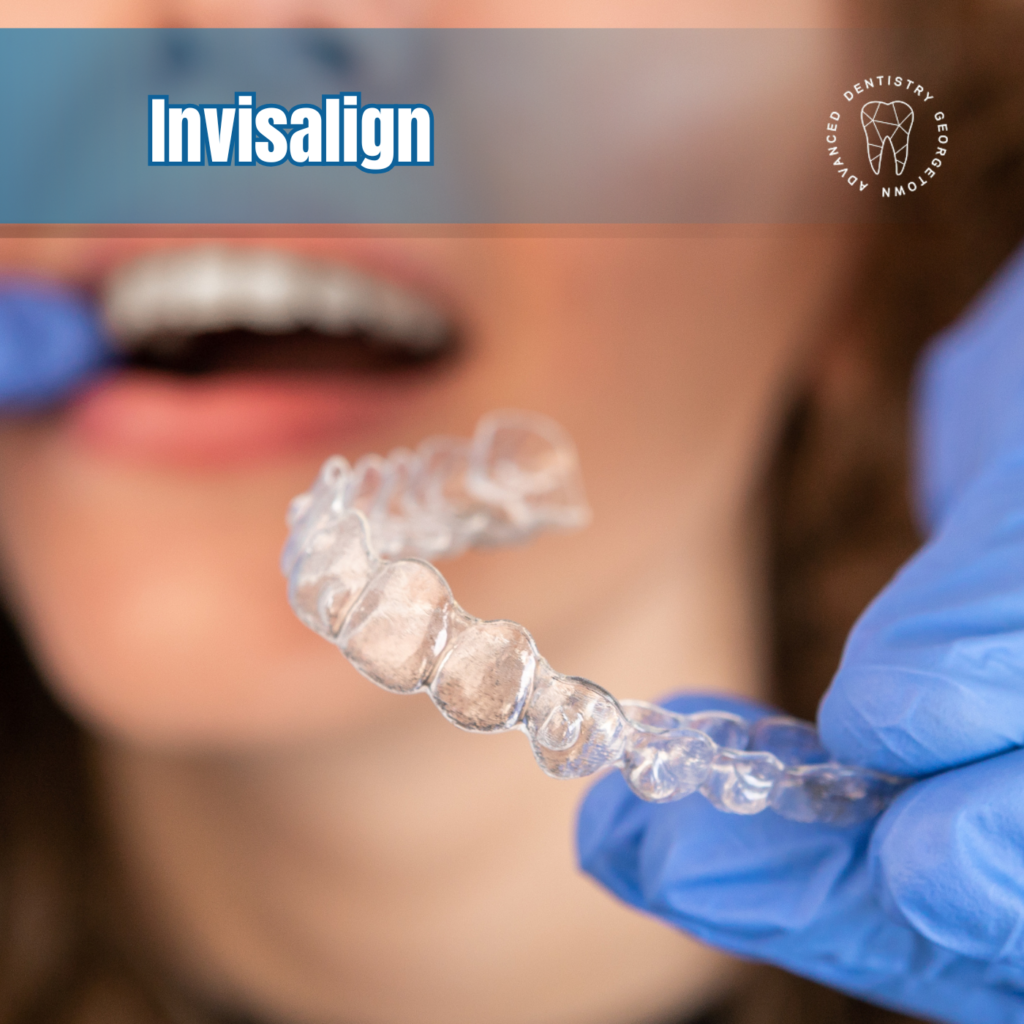
- Invisalign®: A series of custom clear plastic trays that fit over your teeth and apply gentle pressure to move them. Patients wear each aligner 20–22 hours a day for one to two weeks before switching to the next tray. The removable design means you can take them out for meals and hygiene, but you need to be disciplined about wearing them.
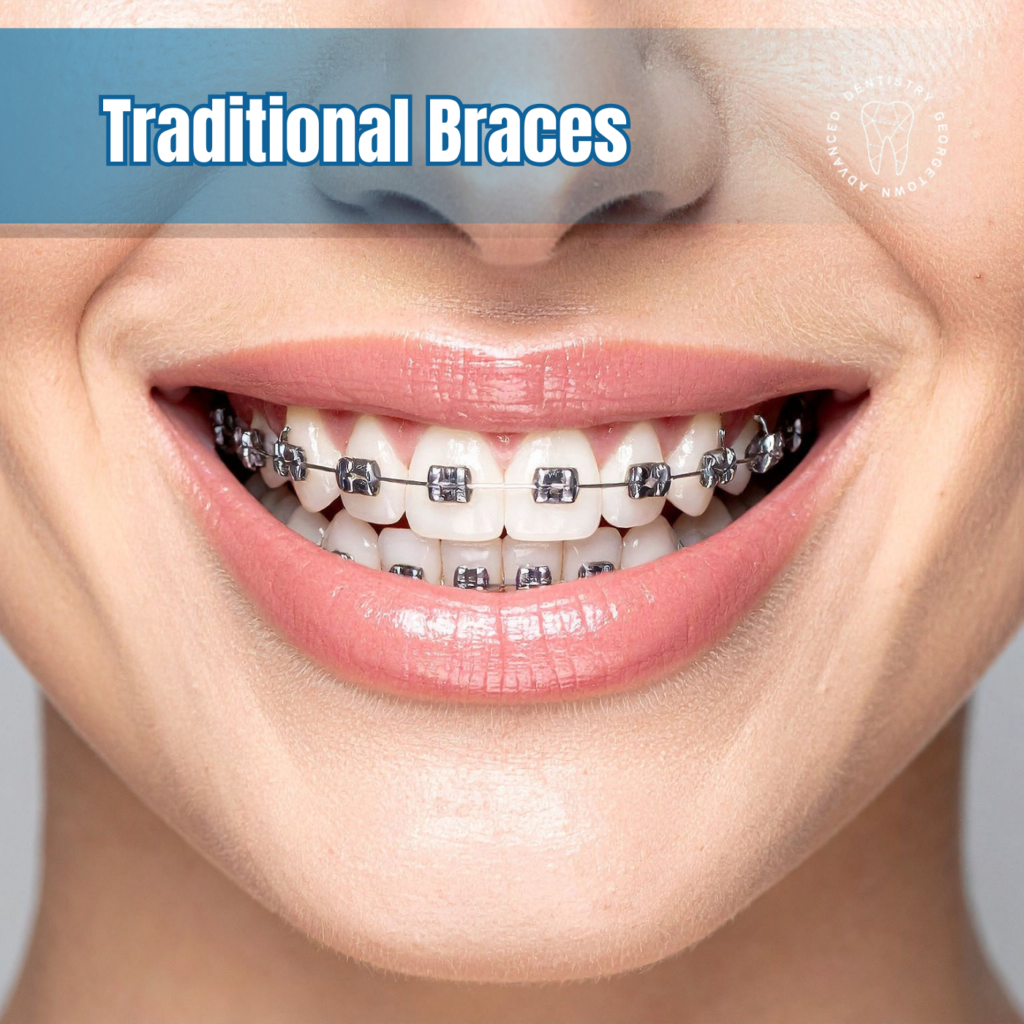
- Traditional Braces: Fixed metal (or ceramic) brackets bonded to the teeth and connected by wires that your orthodontist adjusts at regular appointments. Because braces are continually applying force, they work well for complex cases and severe bite problems.
Both systems gently move teeth into their ideal positions under the guidance of a trained orthodontist.
Appearance and Comfort
- Discreet vs. noticeable: Invisalign aligners are made from clear plastic and are virtually invisible. Many adults and teens choose them because they blend with the teeth and don’t change your appearance in photos. Braces use metal brackets and wires that are more visible (although ceramic or lingual options are less noticeable).
- Comfort: Because Invisalign trays are smooth plastic, they tend to cause less irritation to lips and cheeks and reduce mouth soreness. Traditional braces may feel tighter and can irritate soft tissues, especially after adjustments.
Lifestyle and Oral Hygiene
- Eating and drinking: With Invisalign, there are no food restrictions—just remove your aligners before meals. Traditional braces mean avoiding sticky, hard or chewy foods that could damage brackets or wires.
- Cleaning: Because Invisalign trays are removable, brushing and flossing remain part of your normal routine, making oral hygiene easier and reducing the risk of plaque buildup. Braces can trap food particles, so cleaning around brackets and under wires requires more time and special tools.
- Appointments: Invisalign patients typically need fewer office visits than braces patients because there are no wires to tighten. However, both treatments require regular check-ins to monitor progress and adjust the plan.
Treatment Time and Effectiveness
- Case complexity: Traditional braces are often the best option for severe crowding, large gaps or significant bite problems. They offer precise control over tooth movement and can handle complex issues.
- Invisalign suitability: Invisalign is ideal for mild to moderate misalignment and bite issues. It can correct overbite, underbite, crossbite, overjet, crowding and spacing. Because the aligners are changed frequently, some patients finish treatment more quickly than with braces.
- Typical duration: Invisalign plans often range from 12–18 months, depending on patient compliance and case complexity. Braces can take 18–24 months or longer for severe cases.
Cost Considerations
- Comparable pricing: The overall cost of Invisalign and braces is similar and depends on case complexity and treatment length. Braces generally range from $3,000 to $7,500, while Invisalign costs are often comparable.
- Insurance and payment plans: Many dental insurance plans cover a portion of orthodontic treatment for both options. Flexible payment plans are common, so ask your provider about financing.
Choosing the Right Option
- Aesthetics and discretion: If keeping your treatment low‑profile is important, Invisalign may be the best choice.
- Compliance: Invisalign’s success depends on wearing the aligners 20–22 hours per day. Forgetting to wear them can extend treatment time. Braces are fixed and constantly working, so there’s no risk of forgetting.
- Complexity: For complex or severe bite issues, traditional braces often provide more precise results.
- Personal preferences: Some patients prefer the predictability and control of braces, while others value the flexibility and discreet appearance of Invisalign. Discuss your goals and lifestyle with an orthodontist to find the best fit.
Next Steps: Get a Personalized Consultation
Choosing between Invisalign and braces isn’t just about the aesthetics—it’s about your unique smile and lifestyle. The best way to decide is to schedule a consultation with the Georgetown Advanced Dentistry team. We’ll evaluate your bite, discuss your goals and recommend a customized orthodontic plan. Together, we’ll help you achieve a confident, healthy smile.
Frequently Asked Questions
1. How long do I need to wear Invisalign aligners each day?
Aligners should be worn 20–22 hours per day and changed every one to two weeks. Removing them for extended periods can prolong treatment.
2. What orthodontic issues can Invisalign treat?
Invisalign can correct overbite, underbite, crossbite, overjet, crowding and gaps. Complex issues may still require braces.
3. Are there food restrictions with Invisalign?
No. Because the trays are removable, you can eat your usual diet. Just remember to brush before putting your aligners back in.
4. Do braces treat more complex cases than Invisalign?
Yes. Traditional braces provide precise control and are often recommended for severe misalignments or bite problems.