Dentures in Washington, DC
Custom-crafted dentures that fit better, feel better, and help you smile with confidence
Please don't hesitate to call us at (202) 920-1410
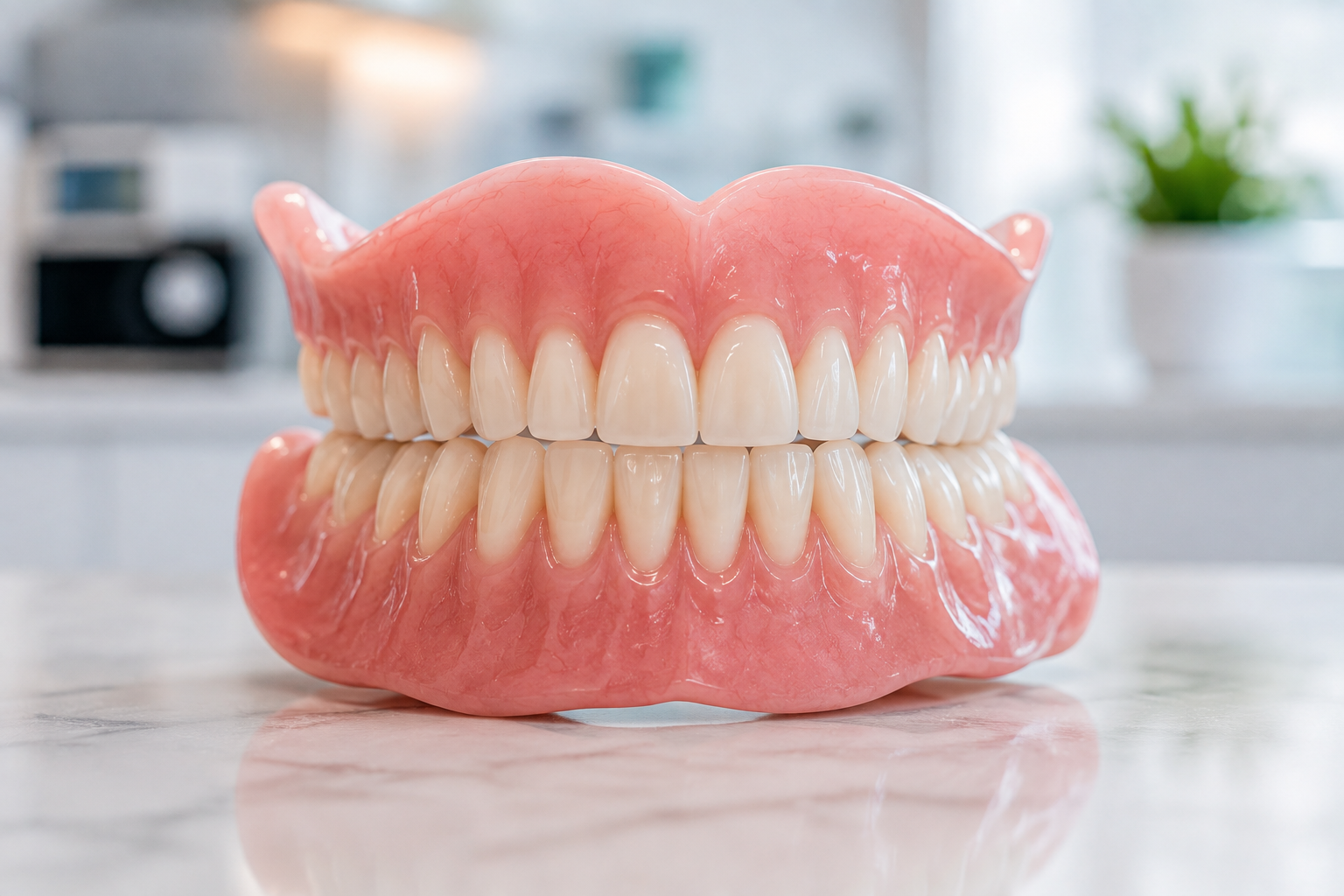
Modern dentures don't have to slip, click, or feel like a compromise. Today's materials, digital fitting techniques, and implant-supported options make dentures more comfortable, natural-looking, and stable than ever before.
At Georgetown Advanced Dentistry, Dr. Sinclair Davis, DDS, takes a comprehensive approach to dentures — evaluating each patient's oral health, remaining tooth structure, jawbone density, and lifestyle goals to recommend the option that fits best. Whether you need a partial denture to replace a few missing teeth, a full traditional denture, an immediate denture placed the same day as extractions, or an implant-supported denture that anchors securely, we build a solution around you. We serve patients throughout Washington, DC, including Georgetown, Palisades, Chevy Chase, Tenleytown, and Northwest DC.
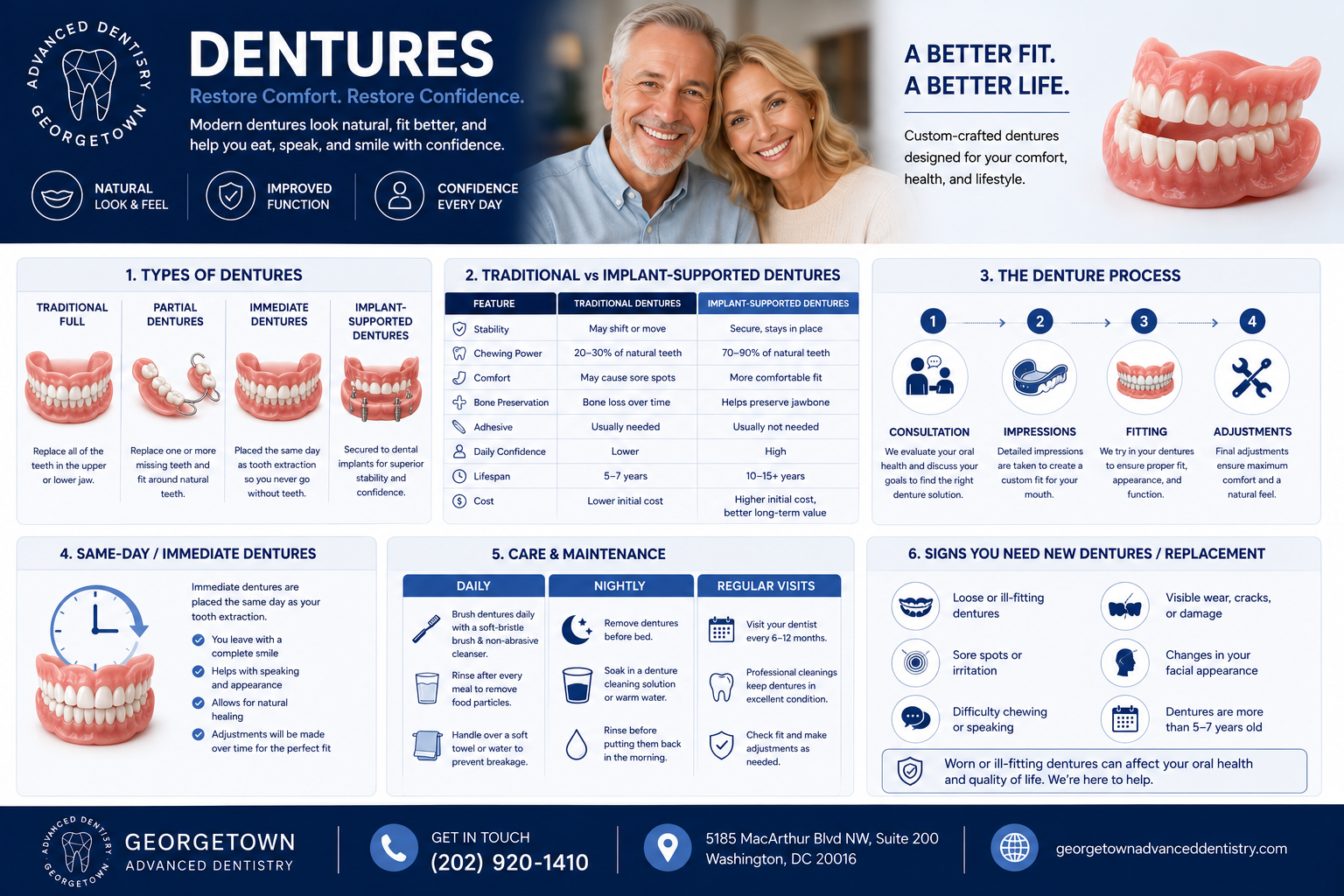
Four Denture Options — Matched to Your Situation
Different dentures serve different needs. Dr. Davis recommends the type best suited to your oral health, budget, and long-term goals.
Full Dentures
Replace all of the teeth in either the upper or lower arch. A pink acrylic base rests directly on the gums, held in place by suction or denture adhesive.
Partial Dentures
Replace one or more missing teeth while working around your remaining natural teeth. Attach with clasps or precision connectors for a secure fit.
Immediate Dentures
Placed the same day as tooth extraction, so you leave with a complete smile. Serves as a functional interim solution while gums heal, before final dentures are fitted.
Implant-Supported
Anchored to 2–4 dental implants for maximum stability. Won't slip, click, or need adhesive. Available as removable (snap-in) or fixed options.
Traditional vs. Implant-Supported Dentures
The biggest decision most patients face is whether to go with a traditional gum-supported denture or an implant-supported design. Both are valid choices — but they perform very differently in daily use.
Traditional Dentures
Sit directly on the gum tissue and rely on natural suction or adhesive for retention. Lower upfront cost. Can shift or slip during eating and speaking, and gradual bone loss over time may require relining every few years.
Implant-Supported Dentures
Anchored to 2–4 dental implants. Do not slip or require adhesives, function much like natural teeth, and stimulate the jawbone to prevent bone loss. Higher upfront investment, but greater long-term durability and comfort.
What to Expect at Each Step
From your first consultation to final adjustments, our process is designed around precision fit and long-term comfort.
Consultation
We evaluate your oral health, remaining teeth, jawbone density, and lifestyle goals to identify the right denture solution for you.
Impressions
Detailed digital scans and traditional impressions capture the precise shape of your mouth for a custom-crafted fit.
Fitting
We try in your dentures to confirm proper bite, appearance, and function. Adjustments are made until the fit is exactly right.
Adjustments
Follow-up adjustments over the first several weeks ensure lasting comfort, and any pressure points are refined as your mouth settles.
Leave Your Appointment with a Complete Smile
Immediate dentures are prepared before your tooth extraction so they can be placed the same day the teeth come out. You avoid the discomfort and self-consciousness of being without teeth while your gums heal — and the denture also acts as a protective bandage over the extraction sites.
- You leave with a complete smile — no waiting period
- Helps with speaking and appearance during healing
- Acts as a protective barrier during recovery
- Adjustments made over time as gums naturally reshape
- Relines or replacement usually needed after full healing
- Considered a transitional solution to final dentures
Caring for Your Dentures
Consistent care extends the life of your dentures and protects your oral health. Here's what a proper routine looks like.
Every Day
- Brush dentures daily with a soft-bristle brush and non-abrasive cleanser
- Rinse after every meal to remove food particles
- Handle over a soft towel or water to prevent breakage if dropped
- Keep gums and remaining teeth clean with regular brushing
Before Bed
- Remove dentures before sleeping to let gum tissue rest
- Soak in a denture cleaning solution or warm water overnight
- Never use hot water — it can warp the shape
- Rinse thoroughly before putting them back in the morning
Ongoing Care
- Visit your dentist every 6–12 months for check-ups
- Professional cleanings keep dentures in excellent condition
- Regular oral exams monitor gum health and fit
- Adjustments and relines as needed for continued comfort
Signs You May Need New Dentures
Dentures don't last forever. Watch for these signs — they usually mean it's time for a reline, adjustment, or replacement.
Loose or Ill-Fitting
Dentures shift when talking or eating, or require increasing amounts of adhesive to stay put.
Sore Spots or Irritation
Persistent gum irritation, sore spots, or mouth ulcers indicate pressure points from an outdated fit.
Difficulty Chewing or Speaking
Foods become harder to eat, or you notice slurring, clicking, or whistling sounds when speaking.
Visible Wear or Damage
Cracks, chips, worn teeth, or a discolored acrylic base — dentures gradually degrade over years of use.
Changes in Facial Appearance
A sunken or aged look around the mouth typically signals jawbone loss and worn-down dentures.
Older Than 5–7 Years
Even well-maintained dentures typically need replacement after 5 to 7 years of daily wear.
Frequently Asked Questions
Straight answers to what patients ask most about dentures.
Can you have dentures made the same day?
Yes — same-day, or "immediate," dentures are a real option. The dentures are prepared in advance based on impressions and measurements taken before your tooth extractions, so they can be placed immediately after the teeth are removed. This allows you to avoid time spent without teeth while your gums heal. Keep in mind that immediate dentures are considered a transitional solution — as your gums heal and reshape, you'll typically need relines or a final, permanent set once healing is complete.
How good are same-day dentures?
Same-day dentures serve an important role — they restore your appearance and basic function immediately after extractions, and they also protect the healing extraction sites. However, they're placed before the gums and bone have fully healed and settled. As your mouth heals over the following months, these dentures may become loose and require relining or replacement with a permanent set. Think of them as an excellent interim solution, not necessarily the final answer.
What are the disadvantages of implant-supported dentures?
The primary considerations include a higher initial investment compared to traditional dentures, and the requirement for oral surgery with a healing period for the implants to integrate with the jawbone. Additionally, not all patients have sufficient bone density to support implants without needing supplemental procedures like bone grafting. For most patients who qualify, the trade-offs are well worth it — better stability, no slipping, no adhesives, and long-term jawbone preservation. Learn more about our dental implant options.
Do implant-supported dentures cover the roof of your mouth?
Generally, no. Because implants provide the necessary stability, the plastic palate — the part that covers the roof of your mouth in a traditional upper denture — can often be removed or significantly reduced. This design improvement makes eating more comfortable and enhances your ability to taste food. It's one of the most appreciated benefits by patients who switch from traditional to implant-supported upper dentures.
How long do you have to wait to get dentures after teeth are pulled?
It depends on whether you choose immediate or conventional dentures. Immediate dentures are placed the same day as extractions, so there's no waiting. Conventional dentures typically require a healing period of several weeks to a few months after extractions before final fittings can be completed — this allows gum tissue to heal and jawbone to settle into its final shape, resulting in a more precise, longer-lasting fit.
Are dentures uncomfortable to wear?
Modern, well-fitted dentures should not be painful, though there's typically a two-to-four-week adjustment period where you get used to the feel, speech patterns, and eating with them. Some minor soreness or pressure points during the first week is normal and easily corrected with a follow-up adjustment. If pain persists beyond the adjustment phase, that's a sign the fit needs refinement — never something you should just live with.
Schedule a Denture Consultation in Washington, DC
Whether you're ready to replace missing teeth for the first time or update aging dentures that no longer fit, Dr. Davis can walk you through the right option for your situation. Contact Georgetown Advanced Dentistry to schedule your personalized consultation.